How fire alarms and warnings work
Learn the main alarm devices in a warehouse and how to respond to them.
Why alarms matter
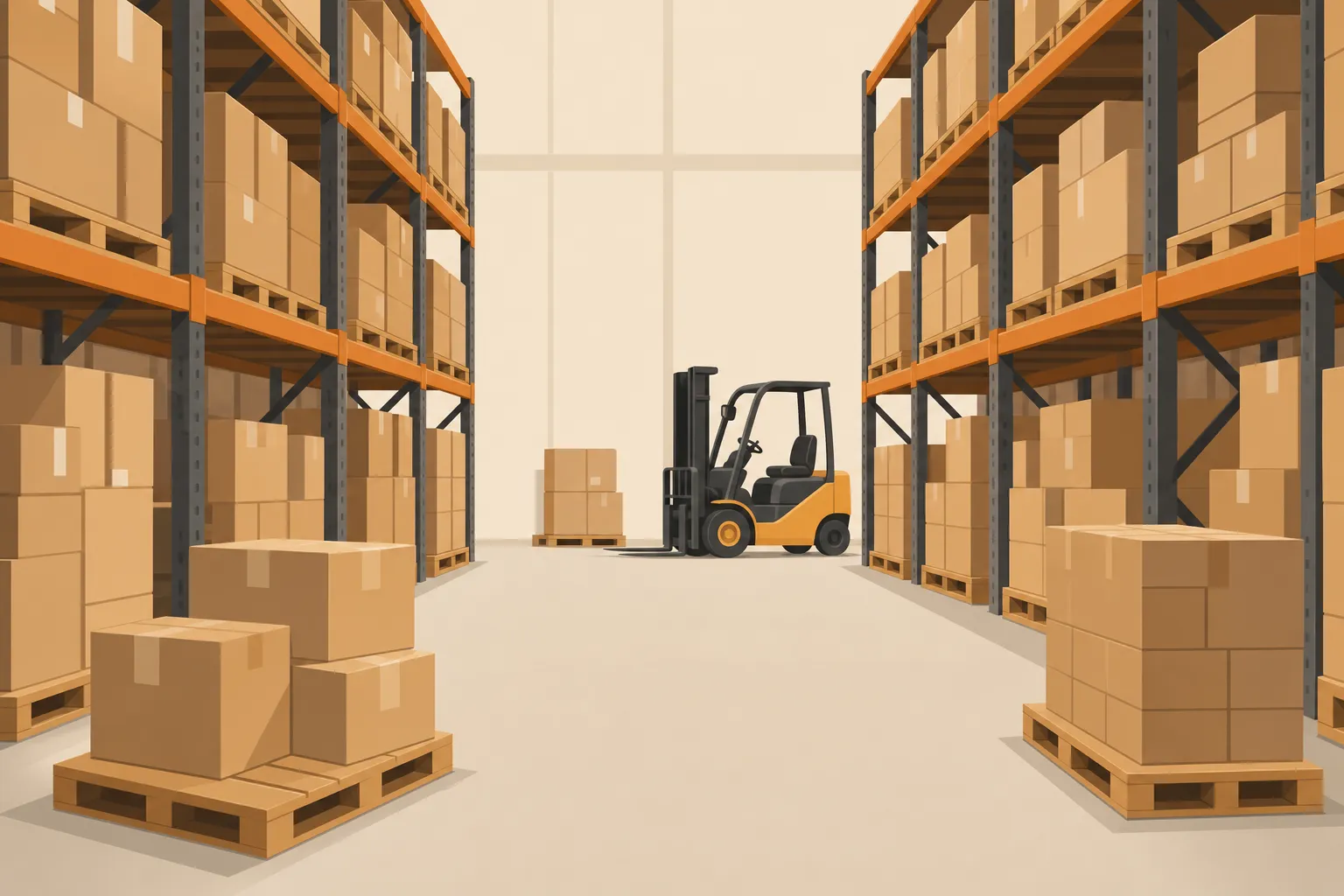
A fire can grow very fast in a warehouse. Boxes, pallets and plastic wrap burn quickly, and smoke can fill a large space in minutes. An alarm gives everyone an early warning. The sooner people know, the sooner they can leave safely.
Alarm devices you will meet
- Smoke detectors sense smoke in the air and set off the alarm automatically.
- Heat detectors sense a rise in temperature. They are used where dust or vapour could cause false alarms.
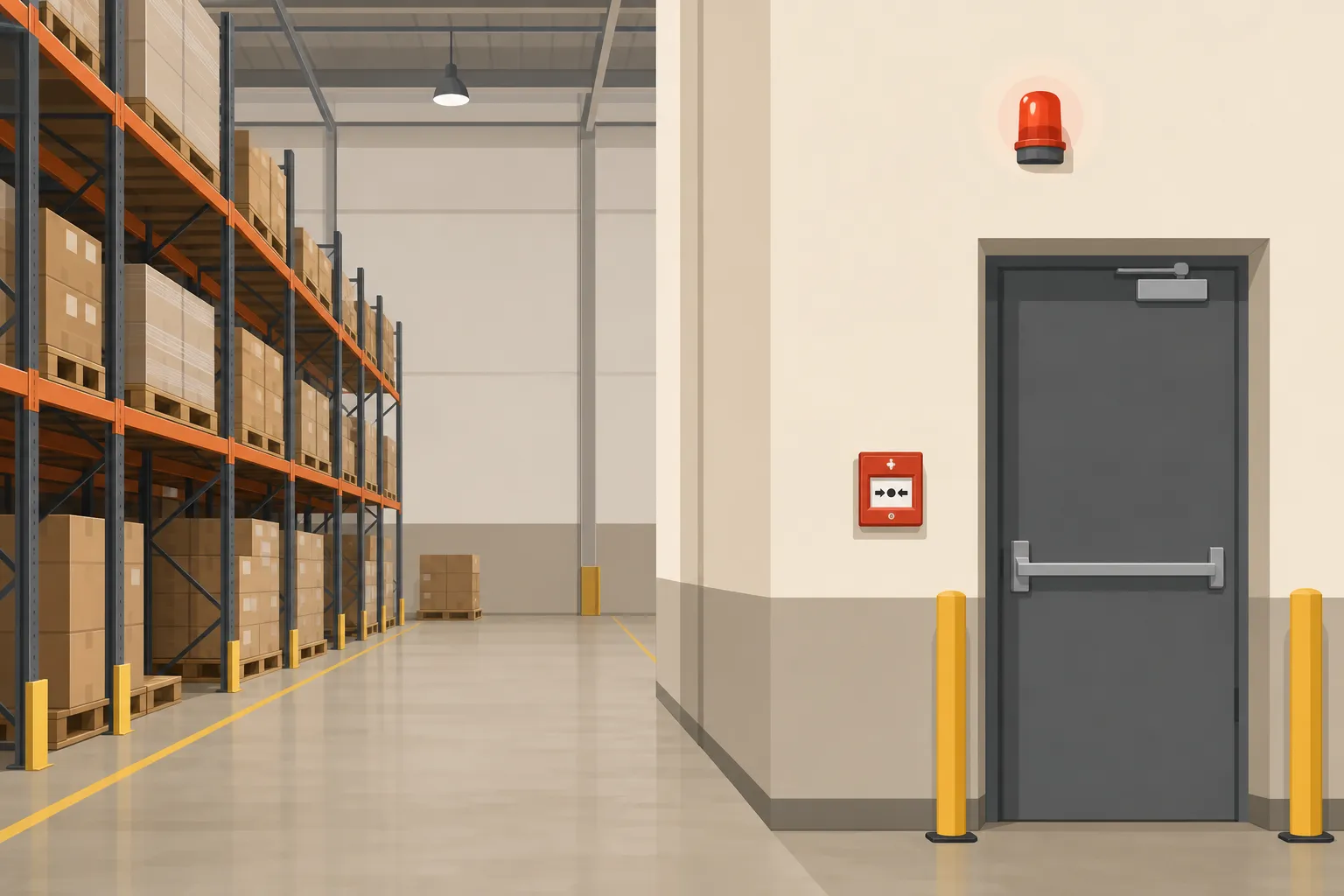
- Manual call points are break-glass boxes on walls and near exits. You press or break the glass to raise the alarm by hand.
- Sounders and beacons are the sirens and flashing lights that tell everyone to leave.
What to do if you find a fire
If you see a fire or smoke, raise the alarm straight away. Go to the nearest manual call point and operate it. Do this before you try anything else. Then follow the evacuation route you were shown. Do not wait for someone else to act. Do not assume the alarm has already been raised.
What to do when the alarm sounds
Always treat an alarm as real. Stop work and leave the building by the nearest safe exit. Do not stop to collect your things. Do not use a forklift or other vehicle to leave. Keep aisles and doors clear so others can pass. Warn anyone nearby who may not have heard, such as someone wearing ear defenders.
Keeping alarms ready
Alarms only work if they are kept clear and tested. Never block a call point with pallets or stock. Never cover a detector. Tell your supervisor if a call point is damaged or a detector looks covered. Most sites test the alarm once a week, at the same time. If you hear a test, you still need to know what the real alarm sounds like. Learn how your site tells a test from a real alarm. Evacuation routes and meeting points are covered in a later section.